Ladder Safety and Eye Wellness
Falls from height and eye injuries remain two of the most frequent workplace incidents in Housing and Utilities. The encouraging news is that most of these cases are avoidable with simple checks and consistent PPE standards.
This Expert Advice guide gives you practical steps you can put in place straight away. It is written for organisations that want to raise safety standards, reduce avoidable downtime and support teams with the right equipment.
At the end of the article, you can download our free Height and Eye Safety Pack containing ready‑to‑use checklists and posters for your sites and teams.
What makes height and eye tasks higher risk?
Across both Housing and Utilities, teams work in environments where hazards change quickly. Reactive repairs, outdoor work, loft and void access, groundworks, cutting and drilling, and confined spaces all create situations where slips, trips and eye injuries are more likely.
Examples of everyday tasks where risk increases include:
- Climbing ladders for inspections or repairs
- Working in stairwells, plant rooms and lofts
- Cutting, drilling or grinding during maintenance
- Handling insulation, dust or debris
- Using chemicals or cleaning agents
- Carrying out utility work outdoors or in low light
These are routine activities. The challenge is that routine can make hazards feel “normal”, which is why strong PPE habits matter.
The three PPE checks that reduce ladder incidents
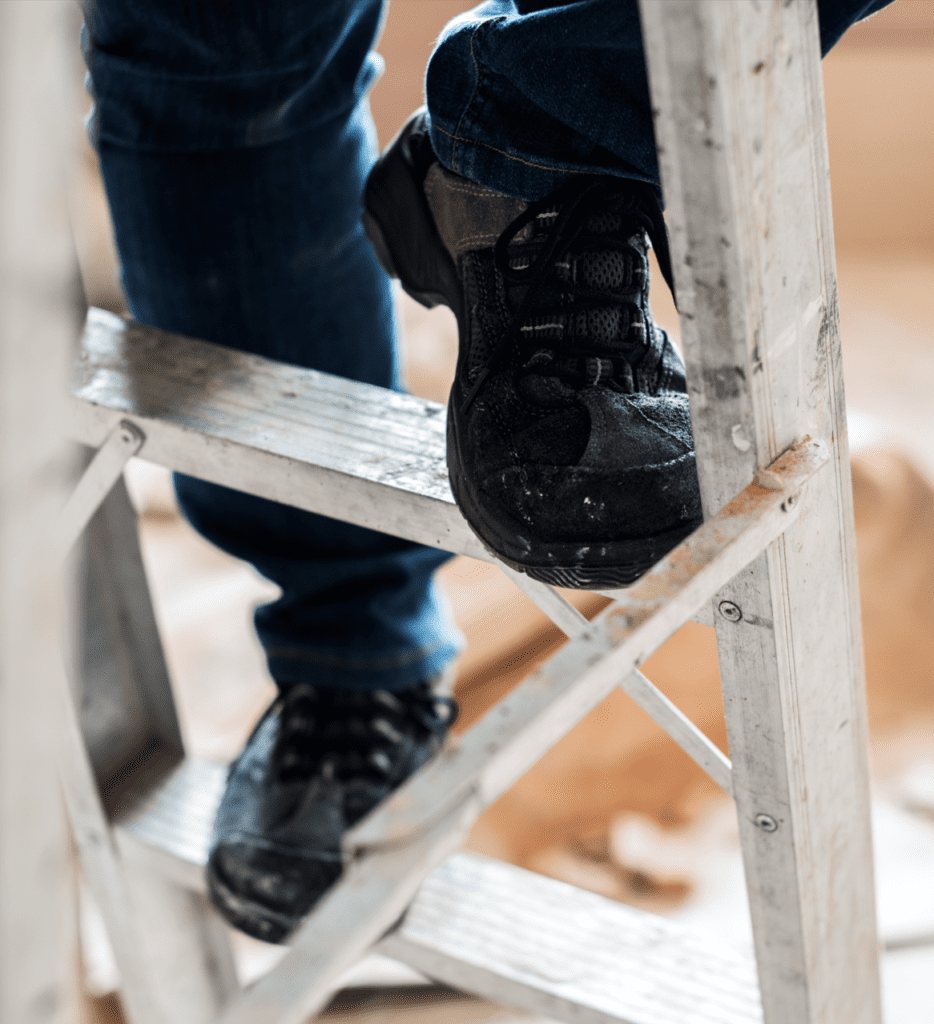
Your teams rely on their footwear every time they climb. The right boot makes a meaningful difference to stability and grip.
Three essential checks before using a ladder:
Slip‑resistant sole
The boot should have a solid grip on each rung, especially in wet or dusty conditions.Defined heel block
A pronounced heel helps the foot stay securely positioned on the ladder.Good tread
Tread that is worn smooth removes friction and increases the risk of slipping.
Do not climb if:
Footwear is worn out, contaminated with mud or oil, or if the person is wearing trainer‑style footwear that is not designed for ladder use.
These checks take seconds and they significantly reduce the likelihood of falls.
The three PPE checks that lower the risk of eye injuries

Eye injuries usually happen fast. The protection worn needs to match the task. One pair of eyewear cannot cover every hazard your teams face.
Three essential checks for eye protection:
Wear EN‑rated eyewear
This ensures the eyewear has been tested for occupational hazards.Check the fit
Eyewear should sit firmly, without gaps, and stay in place without slipping.Check the lens condition
Lenses must be clear. Scratches, fogging or damage reduce visibility and can lead to further risk.
Never start work if:
The eyewear is damaged, inappropriate for the task, or if someone is relying on standard sunglasses instead of proper PPE.
Why contractor variation increases risk
Many Housing and Utility teams work alongside contractors or external partners. If everyone is not working to the same PPE standard, the chance of errors and incidents increases.
Consistent footwear and eyewear policies across your teams and contractors help create a safer, more predictable working environment. This also supports audit compliance, reduces investigation time and strengthens trust with residents and the public.
Simple safety improvements you can action immediately
Small, consistent steps often have the strongest impact.
Height safety improvements:
- Replace boots with worn tread
- Introduce ladder‑safe footwear checks
- Ensure contractors follow the same footwear requirements
- Carry out spot checks, especially during reactive work
Eye protection improvements:
- Replace eyewear that is scratched or loose
- Provide sealed goggles for dusty environments
- Issue UV‑rated eyewear for outdoor work
- Keep spare eyewear in vans for unexpected tasks
These actions support safer teams and smoother operations.
Download the Height and Eye Safety Pack
Our Height and Eye Safety Pack includes:
- A ladder‑safe footwear checklist
- An eye protection selection guide
- Quick‑check posters for workspaces
- Supervisor checklists
- Contractor alignment guidance
- A simple PPE standardisation sheet
It is designed to help you build safer habits across your teams and contractors.
Complete the form below to receive your copy, or get in touch.
Further Reading and Official Guidance:
1. HSE – PPE at Work (General PPE Law & Guidance)
2. HSE – Eye Protection (How to choose the right type)
https://www.hse.gov.uk/toolbox/ppe/eyeprotection.htm
3. HSE – Safe Use of Ladders and Stepladders
https://www.hse.gov.uk/work-at-height/ladders/
4. HSE Leaflet INDG455 – Ladders & Stepladders (Printable PDF)
https://onsafelines.com/qhse.support/public-documents/industry-guidance/indg455.pdf
5. Ladder Association – Official Ladder Safety Guidance
https://ladderassociation.org.uk/
6. HSE – Slips & Trips (Footwear Guidance)
https://www.hse.gov.uk/slips/index.htm
7. HSE – Skin at Work: Sun Exposure for Outdoor Workers
https://www.hse.gov.uk/skin/sunprotect.htm
8. HSE – Dust in the Workplace (Relevant to eye/dust hazards)
9. CDC/NIOSH – Eye Safety for Workers (Global reference)
https://www.cdc.gov/niosh/ppe/eye-safety/index.html
10. EN166 Eye Protection Explained (Clear breakdown of markings)
https://www.uvex-safety.com/en/knowledge/safety-standards/safety-glasses/